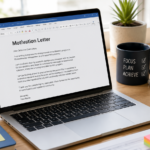
A well-written cover letter can make a strong first impression before a recruiter even opens your CV. While many applicants focus only on updating their resumes, Some employers in Nigeria request a cover letter, while others make it optional or require only a CV and application form. Always follow the instructions provided in the vacancy.
A cover letter is not a summary of your CV. Instead, it is your opportunity to introduce yourself, explain your interest in the role, and show the employer why you deserve to be considered for an interview.
Whether you are applying for your first job after graduation or looking for a new career opportunity, learning how to write an effective cover letter can improve the quality of your applications.
- Why Cover Letters Matter in Nigeria
- Why Cover Letters Matter in Nigeri
- Before You Start Writing
- Structure of an Effective Cover Letter
- Qualities of a Strong Cover Letter
- Common Mistakes to Avoid
- Practical Tips for Nigerian Job Seekers
- Sample Cover Letter Outline
- Frequently Asked Questions
- Should every Nigerian job application include a cover letter?
- How long should a cover letter be?
- Can I use the same cover letter for every job?
- Should I mention salary expectations?
- Is a handwritten cover letter required?
- Can fresh graduates write effective cover letters?
- Write a Cover Letter That Supports Your Application
Why Cover Letters Matter in Nigeria
A cover letter is a one-page document submitted alongside your CV or resume when applying for a job. It provides additional context about your qualifications, motivation, and professional background.
Unlike a CV, which lists your education, skills, and work history, a cover letter allows you to tell your professional story in a more personal and focused way.
Employers often use cover letters to evaluate:
- Communication skills
- Professionalism
- Attention to detail
- Understanding of the role
- Genuine interest in the company
Why Cover Letters Matter in Nigeri
Even when a cover letter is optional, including one can demonstrate extra effort and professionalism.
Some vacancies attract many qualified applicants. When candidates have similar qualifications, a thoughtful and relevant cover letter can help an employer understand how an applicant’s experience relates to the position.
A strong cover letter can:
- Introduce your professional background clearly.
- Highlight achievements most relevant to the role.
- Explain career transitions or employment gaps.
- Demonstrate knowledge of the company.
- Show enthusiasm without sounding exaggerated.
Recruiters appreciate applicants who customize their applications instead of sending identical letters to every employer.
A cover letter works best when it is paired with a well-structured CV. While the cover letter introduces your motivation and suitability for the role, your CV provides detailed information about your education, skills, and work experience.
If you have not updated your resume recently, consider reading our guide on How to Write a Professional CV for Nigerian Jobs before submitting your application.
A strong cover letter is only one part of a successful job application. Before applying, it is important to understand how employers advertise vacancies, what documents are typically required, and how to prepare for each stage of the recruitment process.
If you’re looking for a broader overview, our guide on How to Get a Job in Nigeria (2026): A Practical Guide for Job Seekers explains practical strategies for finding vacancies, preparing applications, and improving your chances of securing employment.
Before You Start Writing

Take time to understand the job advertisement before drafting your letter.
Pay attention to:
- Required qualifications
- Key responsibilities
- Desired skills
- Years of experience
- Company values
- Industry-specific requirements
Make notes of the qualities the employer appears to value most. Your cover letter should address those points naturally.
Structure of an Effective Cover Letter
1. Include Your Contact Information
Start with:
- Full name
- Phone number
- Professional email address
- City and state (optional)
Then include:
- Employer’s name (if available)
- Company name
- Date
2. Use an Appropriate Greeting
Whenever possible, address the hiring manager by name.
Examples:
- Dear Hiring Manager,
- Dear Recruitment Team,
- Dear Human Resources Manager,
Avoid outdated greetings such as “Dear Sir/Madam” unless no other option is available.
3. Open With Purpose
Your opening paragraph should immediately explain:
- The position you are applying for.
- Where you found the vacancy.
- A brief statement showing your interest.
Example:
“I am applying for the Administrative Officer position advertised on your company website. With experience supporting office operations and coordinating administrative tasks, I am interested in contributing to your team.”
Keep the introduction concise and relevant.
4. Show Why You Are a Good Fit
This is the most important part of your letter.
Instead of repeating your CV, explain how your experience relates to the advertised role.
Discuss examples such as:
- Projects completed
- Professional achievements
- Relevant certifications
- Technical skills
- Leadership experience
- Customer service accomplishments
- Problem-solving abilities
Where possible, include measurable results.Use only figures and outcomes that are accurate and that you could explain or support during an interview. Never invent percentages, revenue figures, team sizes or performance results merely to make a cover letter sound impressive.
For example:
- Improved filing efficiency
- Reduced processing time
- Increased customer satisfaction
- Managed successful projects
- Coordinated large teams
Specific examples are more convincing than broad claims.
5. Explain Why You Want the Position
Employers appreciate applicants who have taken time to understand the organization.
Briefly explain why the role interests you.
You might mention:
- Alignment with your career goals
- Interest in the company’s work
- Relevant industry experience
- Opportunity to apply your skills
Keep this section genuine and professional.
6. End With Confidence
Your closing paragraph should:
- Thank the employer.
- Express interest in discussing your application.
- Mention that your CV is attached.
- Invite further communication.
Finish with:
Kind regards,
or
Yours sincerely,
followed by your full name.
Qualities of a Strong Cover Letter
An effective cover letter is:
- Personalized
- Easy to read
- Focused on the employer’s needs
- Free from spelling mistakes
- Professional in tone
- Relevant to the advertised position
- Concise and well organized
Aim to keep the entire document within one page.
Common Mistakes to Avoid
Many applications are weakened by avoidable errors.
These include:
Sending the Same Letter Everywhere
Recruiters quickly notice generic applications.
Customize every cover letter to match the vacancy.
Repeating Your CV
Your cover letter should complement your CV rather than duplicate it.
Focusing Only on Yourself
Instead of listing what you want from the employer, explain how your skills can contribute to the organization.
Including Irrelevant Information
Avoid discussing unrelated hobbies, personal issues, or experiences that do not support your application.
Using Informal Language
Keep your writing professional.
Avoid slang, texting abbreviations, and casual expressions.
Ignoring Proofreading
Simple spelling mistakes can create a poor impression.
Read your letter several times before submitting it.
Practical Tips for Nigerian Job Seekers

Match Your Skills to the Job Description
Employers want evidence that you understand the role.
Refer to the required skills naturally without copying the advertisement word for word.
Keep Formatting Simple
Use:
- Professional fonts
- Standard margins
- Consistent spacing
- Clear paragraphs
Fancy designs are rarely necessary unless applying for creative positions.
Use a Professional Email Address
Your email should contain your real name rather than nicknames.
Save Your Letter as a PDF
Unless instructed otherwise, PDF files preserve formatting across different devices.
Follow Application Instructions
Ignoring these instructions may weaken the application or prevent it from being considered.
Sample Cover Letter Outline
Your cover letter can follow this simple structure:
- Contact information
- Use this structure as a guide rather than a fixed template. The content should be adapted to the specific vacancy, and every achievement or qualification included must be accurate.
- Introduction
- Relevant experience
- Why you want the role
- Closing statement
- Signature
This format works well across many industries, including banking, healthcare, education, engineering, administration, technology, customer service, and non-governmental organizations.Use this structure as a guide rather than a fixed template. The content should be adapted to the specific vacancy, and every achievement or qualification included must be accurate.
When you have addressed a named person, a formal closing such as “Yours sincerely” may be appropriate. When the recipient is not named, “Yours faithfully” is commonly used in formal correspondence. “Kind regards” may suit a less formal application. Follow this with your full name.
Frequently Asked Questions
Should every Nigerian job application include a cover letter?
If the employer requests one, you should always include it. Even when it is optional, a well-written cover letter can strengthen your application.
How long should a cover letter be?
Ideally, one page with three to five short paragraphs.
Can I use the same cover letter for every job?
No. You should tailor each cover letter to the specific employer and position.
Should I mention salary expectations?
Only if the employer specifically requests this information.
Is a handwritten cover letter required?
Most employers now expect typed cover letters submitted electronically unless stated otherwise.
Can fresh graduates write effective cover letters?
Yes. If you have limited work experience, highlight internships, volunteer work, academic projects, leadership roles, and transferable skills.
Once your application documents are ready, you can explore our regularly updated collection of Latest Graduate Jobs in Nigeria to find entry-level opportunities across different industries.
Write a Cover Letter That Supports Your Application
A useful cover letter connects your verified experience, qualifications and skills to the requirements of a specific position. It should complement your CV rather than repeat it and must follow the employer’s application instructions.
Before submitting, confirm that the employer and job title are correct, proofread the letter and verify that every achievement is accurate. If you progress to the next stage, our guide to common interview questions and answers can help you prepare.
Our guide on Common Interview Questions and Answers can help you understand what employers typically ask and how to respond with confidence.